
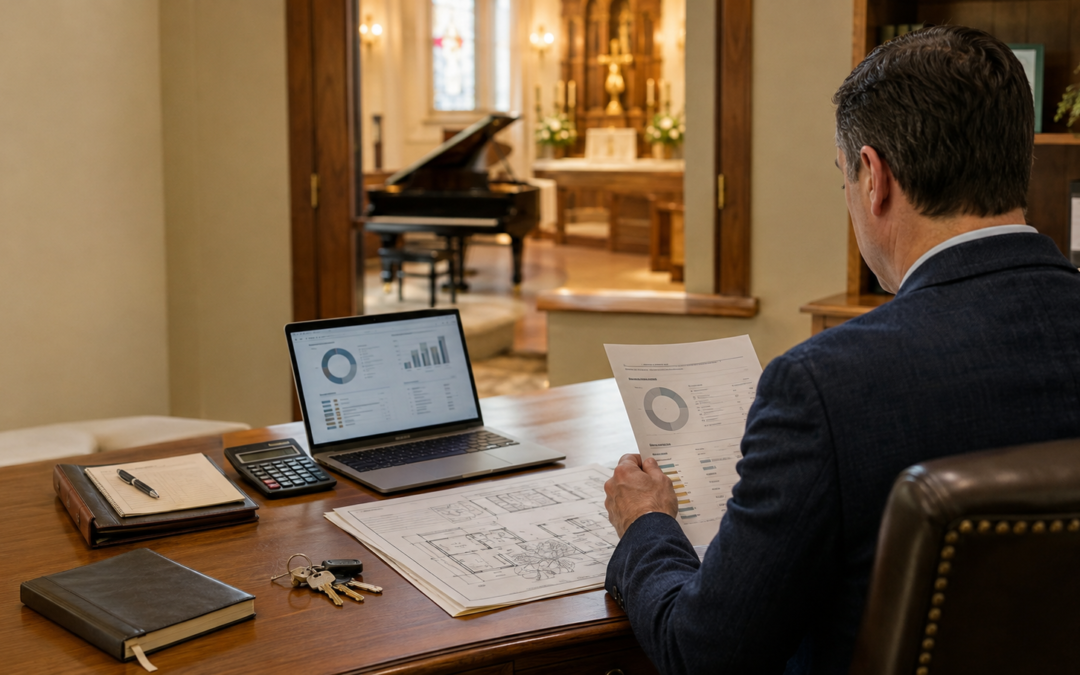
These responsibilities may appear very different from playing the piano, directing music, or conducting a theatre orchestra. In practice, however, they rely on many of the same qualities: careful preparation, attention to detail, communication, adaptability, and an understanding of how individual decisions support a larger organization.
Scott’s work reflects two distinct professional areas—music and performance leadership on one side, and church and parish administration on the other. Together, they reveal a broader commitment to helping people, programs, and organizations function effectively.
The Administrative Work Behind Parish Life
A parish is a worshipping community, but it is also an active organization. Beyond weekly liturgies, parish life may include ministries, meetings, educational programs, special celebrations, community outreach, staff responsibilities, building use, and ongoing operational needs.
For these activities to take place reliably, administrative work must happen behind the scenes. Financial information needs to remain organized. Facilities require attention. Plans must be communicated. Immediate concerns must be balanced with longer-term responsibilities.
Much of this work is intentionally quiet. When administration is effective, parishioners may simply experience a welcoming building, a prepared room, an organized program, or a liturgy that begins as expected. The systems supporting those moments are rarely the most visible part of parish life, but they are essential to it.
The Role of a Financial Services Director
Financial administration requires accuracy, consistency, organization, and responsible oversight. In any community organization, financial decisions affect daily operations as well as the ability to plan for future needs.
A parish financial services role can involve coordinating financial processes, maintaining clear information, monitoring operations, supporting planning, and helping organizational leaders understand available resources and responsibilities. The exact work varies by parish, but the underlying purpose remains consistent: financial operations should support the mission and remain carefully managed.
As Financial Services Director at Blessed Trinity Catholic Community, Scott oversees parish financial operations. This responsibility calls for a different kind of precision than musical performance, yet the mindset is familiar. Details matter. Preparation matters. Accuracy matters. Individual choices must be considered in relation to the larger whole.
Financial Stewardship and Organizational Trust
Financial administration within a parish carries particular significance because resources are connected to the generosity and trust of a community. Responsible stewardship requires more than keeping information in order. It requires an understanding that financial decisions help sustain worship, ministries, staff, facilities, and the parish’s ongoing presence.
Good financial leadership brings clarity to decision-making. Organized information helps leaders evaluate needs, consider priorities, and plan responsibly. It also allows the parish to respond more effectively when circumstances change.
The strongest administrative systems are often the ones that make responsible action easier. They create dependable processes, reduce confusion, and provide a foundation from which the organization can move forward with confidence.
What Facilities Management Contributes
Parish buildings support nearly every part of community life. Worship spaces, offices, rehearsal areas, gathering rooms, classrooms, grounds, and shared facilities all need attention if they are to remain useful and welcoming.
Facilities management can include coordinating building needs, monitoring ongoing responsibilities, communicating with staff or service providers, planning for maintenance, and responding when an unexpected issue arises. It requires both immediate problem-solving and long-term awareness.
As Facilities Manager, Scott oversees facility-related responsibilities at Blessed Trinity. The work requires him to consider how physical spaces support the people who use them. A room is not merely a room; it may be a place for worship, rehearsal, learning, conversation, service, or community gathering.
Balancing Immediate Needs With Long-Term Planning
Facilities work often involves two timelines at once. Some concerns require an immediate response, while others call for evaluation, scheduling, and longer-term preparation. Effective management depends on knowing the difference and allocating attention accordingly.
The same is true of financial operations. Daily details must be handled consistently, but an organization must also look ahead. Future programs, repairs, changing costs, and developing parish needs all benefit from thoughtful planning.
Scott’s combined financial and facilities responsibilities provide a connected view of parish operations. Physical needs have financial implications, and financial planning must account for the buildings and spaces that support parish life. Understanding both areas can help administrative decisions remain practical and coordinated.
Communication Connects Every Responsibility
Parish administration is collaborative work. Staff members, clergy, ministry leaders, volunteers, parishioners, and outside professionals may all need information or assistance. Effective communication helps each person understand responsibilities, timelines, decisions, and next steps.
This does not mean every issue has a simple solution. Financial priorities can compete. Facility needs may arise unexpectedly. Schedules change. Different groups may need the same space or resource. Clear communication helps the parish evaluate these situations and coordinate an appropriate response.
Scott’s experience collaborating with performers, directors, musicians, and production teams translates naturally into this environment. Whether the subject is music or administration, productive collaboration begins with listening carefully, understanding the shared goal, and helping people move toward it together.
How Musical Leadership Supports Administrative Work
Music and administration require different knowledge, but the skills supporting them frequently overlap.
- Preparation: A musician studies before rehearsal; an administrator organizes information before decisions are made.
- Attention to detail: A missed musical cue can affect an ensemble, while an overlooked administrative detail can affect an operation or schedule.
- Timing: Music depends on knowing when to lead, follow, enter, or pause. Administrative work also depends on recognizing priorities and acting at the appropriate time.
- Adaptability: Live performance and parish operations both include unexpected developments that require a calm response.
- Collaboration: Neither a production nor a parish succeeds through the work of one person alone.
- Awareness of the whole: A conductor hears how individual parts form an ensemble. An administrator considers how individual needs affect the larger organization.
These shared qualities help explain how Scott can contribute effectively in roles that may initially seem unrelated.
Serving One Community in Multiple Ways
Scott’s responsibilities at Blessed Trinity Catholic Community bring music and administration together within the same parish. As Associate Director of Liturgical Music, he helps select, prepare, rehearse, and lead music for worship. As Financial Services Director and Facilities Manager, he oversees important operational responsibilities that support the parish throughout the week.
One role may place him at a piano or organ, while another requires attention to financial information or facility needs. The setting changes, but the underlying purpose remains service to the community.
This combination also provides a broad understanding of parish life. Music is connected to worship spaces, schedules, staff, equipment, programs, and people. Administration is not separate from the parish’s mission; it helps create the conditions in which that mission can continue.
A Professional Identity Broader Than One Title
Scott Michael Hamilton is a pianist, collaborative musician, music director, conductor, liturgical musician, and parish administrator. No single title captures the complete range of that work.
What connects these responsibilities is a practical form of leadership. Scott prepares carefully, works with others, responds to changing needs, and considers how individual details serve a larger purpose. Those qualities can be heard in a musical performance, but they are equally important in the administrative systems supporting a parish.
His work beyond the piano demonstrates that meaningful leadership is not always performed in front of an audience. Often, it is found in the consistent preparation and dependable responsibility that allow a community to thrive.
Learn More About Scott Michael Hamilton
Explore Scott’s work in parish administration, learn about his lifelong commitment to liturgical music, or visit the About Scott page for a broader overview of his professional experience.
Continue reading Blog 4: Music, Worship, and Community, Blog 3: Inside Musical Theatre, or Blog 2: What Does a Collaborative Pianist Do?
For professional inquiries, please contact Scott Michael Hamilton.