
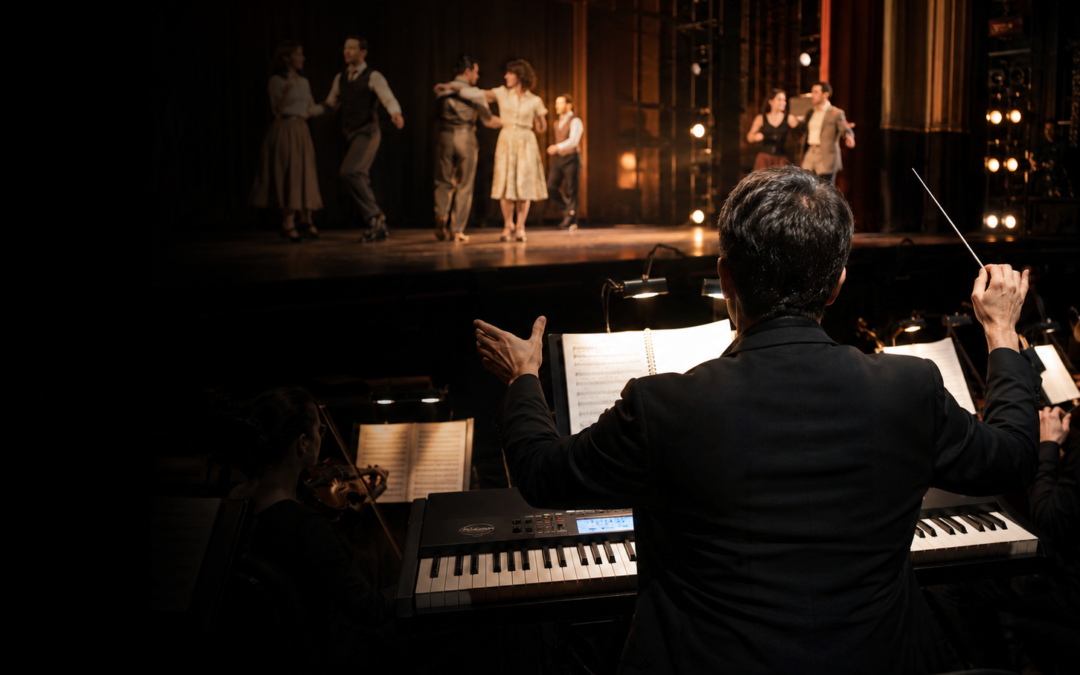
Creating that structure requires much more than rehearsing songs. It involves teaching, interpretation, communication, conducting, planning, problem-solving, and constant collaboration. For Scott Michael Hamilton, musical theatre brings those responsibilities together through work as a music director, pianist, pit conductor, keyboard programmer, and arranger.
Each role approaches a production from a different angle, yet all share the same purpose: helping performers and musicians tell the story through music.
Translating a Musical Score From Page to Stage
A musical score contains notes, rhythms, lyrics, tempos, dynamics, and instrumental details, but the printed page is only the starting point. Every production has its own cast, orchestra, rehearsal schedule, staging, theatre, and creative vision. The music director helps translate the score into a performance that works for that particular production.
This requires an understanding of both musical detail and dramatic context. A song may need to build tension, reveal something about a character, create momentum, or allow the audience to absorb an important moment. Even when the notes remain unchanged, phrasing, pacing, balance, and emphasis can influence how clearly the story is communicated.
The music director studies the score, considers how its individual components fit together, and works with the production team to establish a unified musical direction.
Preparing the Music Before Rehearsals Begin
Strong musical theatre work begins long before opening night. The music director must become familiar with the score, understand the vocal requirements, anticipate difficult transitions, and identify places where singers or instrumentalists may need additional support.
Preparation may include organizing rehearsal materials, reviewing vocal harmonies, studying orchestration, planning tempos, marking cues, and determining how rehearsal time can be used efficiently. If a production calls for adjustments or additional musical preparation, arranging may also become part of the process.
Scott’s background in piano, choral music, collaborative performance, and conducting gives him several ways to approach this work. His Bachelor of Music in Music Education from the University of Montana included piano study with Professor Steven K. Hesla and choral education with Dr. David Edmonds. That combination supports an understanding of the keyboard, the voice, ensemble sound, and the educational process involved in teaching music.
Teaching Vocal Music and Supporting Performers
One of a music director’s most visible responsibilities is preparing the cast to sing the score. This can include teaching melodies and harmonies, establishing rhythms, clarifying entrances, strengthening ensemble passages, and helping performers become confident with the musical material.
Musical theatre performers must often sing while acting, moving, dancing, handling props, or responding to changing stage positions. A passage that feels comfortable in a music rehearsal may require a different kind of coordination once staging and choreography are added. The music director helps performers maintain vocal and musical consistency while integrating those additional demands.
Interpretation is equally important. The goal is not merely to produce accurate notes. Singers need to understand why a character is singing, what changes during the song, and how musical choices support the scene. Scott’s collaborative approach emphasizes listening to performers and helping them develop interpretations that serve both the music and the story.
Working With the Director and Production Team
Musical theatre is one of the most collaborative art forms. Directors, choreographers, designers, stage managers, actors, musicians, and technicians all contribute to the final result. The music director serves as a connection point between the musical needs of the score and the broader goals of the production.
A director may have a particular vision for the mood or pace of a scene. Choreography may affect tempo or phrasing. A scenic transition may require additional time. A performer’s movement may change when an entrance can happen comfortably. The music director helps evaluate these needs and find solutions that preserve musical integrity while supporting what is happening onstage.
This work depends on clear communication. Theatre schedules move quickly, and changes often affect several departments at once. Musical leadership must therefore be organized, responsive, and focused on the production as a whole.
The Pianist in the Rehearsal Room
During early rehearsals, the piano frequently represents the sound and structure of the entire orchestra. The rehearsal pianist provides vocal support, establishes harmony and rhythm, plays orchestral cues, follows changes in staging, and helps keep the room moving.
This requires a broad awareness of the production. The pianist cannot focus only on the keyboard. He or she must watch the conductor or music director, listen to the cast, anticipate entrances, respond to repeated sections, and adjust instantly when rehearsal stops or begins from an unexpected location.
Scott’s experience as both a pianist and a music director allows these responsibilities to inform one another. His understanding of collaborative piano supports the performers in the room, while his understanding of the larger score helps keep individual rehearsal moments connected to the eventual full production.
Leading the Orchestra as a Pit Conductor
Once the orchestra joins the production, the musical focus expands. The pit conductor coordinates musicians and performers who may not always be able to see or hear one another easily. Tempos, entrances, underscoring, scene changes, dialogue, and movement must stay connected.
Unlike many concert settings, musical theatre timing can change slightly from one performance to the next. An audience response may extend a pause. A scene transition may take additional time. A performer may need space for an action or a line. The conductor must preserve the musical framework while responding to the live production unfolding above the pit.
That balance between precision and flexibility is central to Scott Michael Hamilton’s work in theatre. Preparation makes consistency possible, while listening and awareness allow the music to remain connected to the performers.
What Does a Keyboard Programmer Do?
Modern musical theatre often uses electronic keyboards to reproduce or complement a wide range of orchestral sounds. A single keyboard part may call for piano, organ, strings, percussion, synthesizer textures, or other instrumental colors. Keyboard programming organizes those sounds so they can be accessed accurately and efficiently throughout the performance.
This is both a musical and technical responsibility. Sounds must be selected thoughtfully, volume levels balanced, transitions planned, and changes placed where the performer can execute them reliably. The programming should support the orchestration without distracting the player or disrupting the flow of the show.
Scott’s experience with acoustic piano, organ, and electronic keyboards gives him a practical understanding of how different keyboard instruments function within a production. His work as a keyboard programmer adds another layer to his ability to support a musical from rehearsal through performance.
Arranging and Adapting When a Production Requires It
Not every theatre has the same number of musicians, instruments, performers, or rehearsal resources. Productions sometimes require musical material to be adapted while retaining the character and purpose of the original score.
Arranging may involve redistributing musical material, preparing transitions, clarifying vocal parts, or addressing another production-specific need. Effective adaptation requires respect for the score as well as a realistic understanding of the musicians and resources available.
Because Scott has worked as a pianist, conductor, keyboard programmer, and music director, he can consider these questions from multiple perspectives. An adjustment must make musical sense, work for the performers, and function reliably in live performance.
Musical Theatre Work Across Montana
Scott has collaborated with organizations including Montana Actors’ Theatre, the University of Montana, Missoula Community Theatre, Westside Theater, and the Bigfork Summer Playhouse. These experiences have involved a range of musical styles, performers, production environments, and artistic teams.
Every production presents new challenges. One show may depend on complex vocal harmonies, while another places greater demands on the orchestra or keyboards. Some casts include highly experienced singers; others bring together performers with varied musical backgrounds. The music director must understand the material while also responding to the people in the room.
That variety is one reason versatility matters. Musical theatre rewards musicians who can move comfortably between detailed preparation, creative collaboration, technical problem-solving, and live performance.
Musical Leadership in Service of the Story
The work behind a musical can be demanding, but the purpose is beautifully straightforward. Every rehearsal, cue, keyboard patch, vocal harmony, and conducting gesture exists to help tell the story.
Scott Michael Hamilton approaches musical theatre as both an artist and a collaborator. His combined experience at the piano, on the podium, and behind the scenes enables him to support performers while keeping sight of the production’s larger musical direction.
Learn more about Scott’s music direction and musical theatre experience, explore his work in piano and performance, or visit the About Scott page.
Continue the series with Blog 1: A Life of Collaboration at the Piano and Blog 2: What Does a Collaborative Pianist Do? For professional inquiries or upcoming productions, please contact Scott Michael Hamilton.