
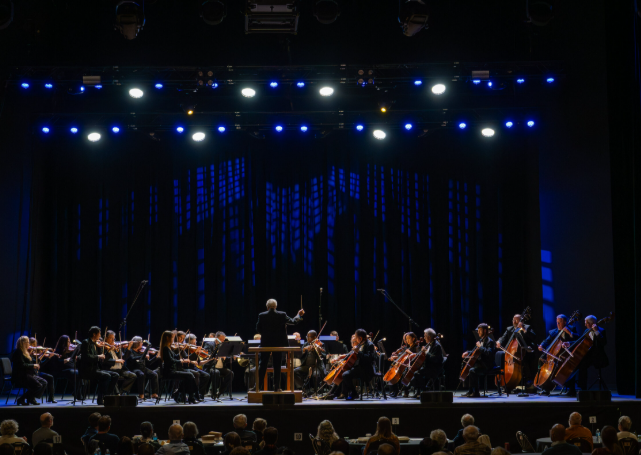
When an audience sees a polished musical performance, the focus is naturally on what happens onstage.
They hear the voices, instruments, harmonies, dynamics, and final interpretation.
What they usually do not see is everything that happened before the first note was played.
Successful performances are built through preparation, communication, listening, collaboration, and leadership.
For a pianist, accompanist, conductor, music director, or educator, musical leadership is not simply about knowing the score. It is about helping other people succeed within the music.
That responsibility is one of the most rewarding parts of making music with others.
Leadership Begins Before Rehearsal
A productive rehearsal starts long before everyone enters the room.
Musical preparation can involve:
- Studying the score
- Understanding the text
- Identifying difficult passages
- Anticipating tempo changes
- Marking entrances and cues
- Planning rehearsal priorities
- Understanding the capabilities of the performers
- Preparing accompaniment or orchestration
- Considering the overall interpretation of the piece
The more prepared a musical leader is, the more rehearsal time can be spent making music rather than simply figuring out what comes next.
Preparation also builds trust.
Performers quickly recognize when the person leading them understands the material and has a clear plan.
Listening Is One of the Most Important Leadership Skills
Music is collaborative by nature.
Even when one person is leading, that does not mean everyone else simply follows without contributing.
Good musical leadership requires constant listening.
A collaborative pianist listens to the singer or instrumentalist and adjusts in real time.
A conductor listens to balance, tempo, phrasing, articulation, and ensemble.
A music director listens for both musical issues and signs that performers may need additional guidance.
Listening allows a leader to respond rather than simply dictate.
That distinction can completely change the atmosphere of a rehearsal.
Clear Communication Makes Rehearsals Better
Musicians want to know what is expected of them.
Confusing directions can waste rehearsal time and create unnecessary frustration.
Effective musical leadership means communicating ideas clearly.
Instead of simply saying that something “doesn’t sound right,” a leader can identify the issue:
- The entrance needs greater clarity
- The tempo is moving too quickly
- The accompaniment is covering the vocalist
- The phrase needs more direction
- The articulation should be lighter
- A transition needs a more deliberate cue
Specific communication gives performers something they can immediately work with.
It also helps create a rehearsal environment focused on improvement instead of criticism.
Good Leaders Know When to Stop Rehearsing
More rehearsal is not always better rehearsal.
One of the most important skills a music director or conductor develops is knowing when to keep working and when to move forward.
Repeating the same section too many times can cause performers to lose concentration.
On the other hand, moving on too quickly may leave important problems unresolved.
The goal is to recognize what needs immediate attention and what can improve naturally as the ensemble becomes more comfortable with the music.
Efficient rehearsals respect the time and energy of everyone involved.
Collaboration Is Different From Control
Strong musical leadership is collaborative.
A director may have a clear artistic vision, but performers also bring their own experience, instincts, and musicianship to the process.
The best results often happen when there is room for both.
That does not mean every musical decision becomes a group vote.
It means creating an environment where performers understand the direction of the music while still feeling that they are active participants in the performance.
That sense of ownership can lead to more confident and expressive playing.
The Accompanist Is a Musical Partner
The word “accompanist” can sometimes make the pianist’s role sound secondary.
In reality, collaborative piano requires an enormous amount of musical awareness.
The pianist must be able to:
- Follow breathing and phrasing
- Adjust tempo immediately
- Support without overpowering
- Anticipate entrances
- Respond to unexpected changes
- Maintain the structure of the music
- Help create the emotional character of the performance
No two performances are exactly alike.
A collaborative pianist must remain present and responsive from beginning to end.
That is part of what makes collaborative performance so rewarding.
Leadership Also Means Creating Confidence
Musicians perform better when they feel prepared.
One of the responsibilities of a director, teacher, accompanist, or conductor is helping create that preparation.
Confidence is not built by telling someone they should feel confident.
It develops through repetition, understanding, clear expectations, and successful experiences.
A well-run rehearsal gradually removes uncertainty.
Performers learn:
- Where they enter
- Who they should listen to
- How transitions work
- What the musical priorities are
- How the ensemble responds when something unexpected happens
By performance time, the goal is for musicians to feel that they know the material well enough to stop worrying about mechanics and start communicating the music.
Mistakes Are Part of the Process
Every rehearsal includes mistakes.
That is what rehearsal is for.
A missed entrance, wrong note, forgotten lyric, tempo problem, or coordination issue does not mean the rehearsal has failed.
It provides information.
The important question is what happens next.
Strong musical leadership identifies the cause of the problem and gives the performer or ensemble a practical way to solve it.
Over time, those moments become part of the preparation that leads to a stronger final performance.
Musical Leadership Extends Beyond the Stage
Many of the skills developed through music apply far beyond performance.
Preparation, communication, accountability, time management, collaboration, and adaptability are valuable in almost every professional environment.
Scott Michael Hamilton’s work reflects that intersection between music and leadership.
His professional background includes piano and collaborative performance, musical direction, conducting, liturgical music, music education, parish financial operations, facilities management, and organizational responsibilities.
While those roles may appear very different, many rely on the same foundation:
Be prepared.
Listen carefully.
Communicate clearly.
Support the people around you.
Follow through on your responsibilities.
Serving the Music
Leadership in music is not about being the most important person in the room.
It is about helping the entire group create something stronger together.
Sometimes that means taking command.
Sometimes it means listening.
Sometimes it means giving a clear cue.
And sometimes it means stepping back so another performer has the space to communicate.
The audience may never see all of those decisions.
They simply experience the result.
And when preparation, collaboration, and leadership come together, the result can be a performance that feels natural, unified, and meaningful.
Music, Direction and Leadership
Scott Michael Hamilton is a pianist, collaborative accompanist, music director, conductor, liturgical musician, and multidisciplinary professional based in Missoula, Montana. His work brings together performance, musical direction, preparation, organizational leadership, and service through music.
To learn more about Scott’s performance work, musical direction, education, and professional experience, explore ScottMichaelHamilton.com.